Buy dekan.eu ?
We are moving the project
dekan.eu .
Are you interested in purchasing the domain
dekan.eu ?
domain@kv-gmbh.de · 0541-91531010
Buy dekan.eu ?
What are oxygen atoms and carbon atoms?
Oxygen atoms are the building blocks of the element oxygen, which is essential for life and makes up a large portion of the Earth's atmosphere. Oxygen atoms have 8 protons and typically 8 neutrons, giving them a total atomic mass of 16. They are known for their ability to form strong bonds with other elements, making them crucial for the formation of molecules such as water and carbon dioxide. Carbon atoms are the building blocks of the element carbon, which is a fundamental component of all known life on Earth. Carbon atoms have 6 protons and typically 6 neutrons, giving them a total atomic mass of 12. They are known for their ability to form long chains and complex structures, making them essential for the formation of organic molecules such as proteins, carbohydrates, and DNA. **
Why are some atoms larger than other atoms?
Some atoms are larger than others because they have more protons, neutrons, and electrons, which increases their atomic mass and size. The number of electron shells and the distance of the outermost electrons from the nucleus also contribute to the size of an atom. Additionally, the arrangement of electrons in the electron shells can affect the size of an atom. Overall, the size of an atom is determined by a combination of its atomic number, electron configuration, and atomic mass. **

Similar search terms for Atoms
Top-Angebote
Products related to Atoms:
-
Canva Pro Education - 1 year SubscriptionWhen you make a purchase, you will receive an email inviting you to sign up for Canva Education , which will give you access to all the professional features of Canva Pro, plus 1,800 neutral Instagram post templates as a free gift Note: Brand Kite is not included How to Copy a Project from Your Personal Canva Account to a Canva Pro Class Account Discover the power of professional design with our annual Canva Pro subscription. With Canva Pro, you’ll have access to a wide range of premium tools and resources that will enable you to create stunning visual content for your business, your personal projects, and much more. Here’s what you can expect with a year’s subscription to Canva Pro: Unlimited access to over 100 million premium resources: Images, videos, audio, graphics and more – all ready to use in your projects. Customisable templates: Thousands of high-quality templates to suit every need, from presentations to social media posts, from leaflets to business cards. Advanced design tools: Features such as one-click background removal, the creation of custom brand kits, and the ability to resize your designs with a single click. Real-time collaboration: Work alongside your team, leaving comments and suggestions directly within projects, for seamless collaboration. Direct posting on social media: Schedule and publish your content directly from Canva across all the major social media platforms. Unlimited cloud storage: Save and organise all your projects in one place, with unlimited storage. Don’t miss the chance to take your design to the next level. With Canva Pro, the possibilities are endless. Subscribe now and start creating like a pro! How come the licence is priced so low? We offer retail licences that are used and discontinued by the previous owner since the EC ruling C-128/2011. That is why you can purchase the official licence on our site at a cheaper price. This is a product in STUDENT Version.7,00 £*Shipping: 0,00 £Secure redirect to the provider
-
Hodder Education Cambridge IGCSE And O Level History 3rd Edition Option B The 20th Century - Education - PaperbackTitle:. Cambridge IGCSE and O Level History 3rd Edition: Option B – The 20th Century. Format: Paperback Overview:. Delve into the transformative decades of modern history with the Cambridge IGCSE and O Level History 3rd Edition: Option B – The 20th Century. This essential student textbook is meticulously aligned with the latest Cambridge International Examinations (CIE) syllabuses 0470 and 2059, providing a comprehensive roadmap through the pivotal era that reshaped geopolitical boundaries, sparked global conflicts, and pioneered worldwide civil rights movements. The text systematically explores mandatory Option B topics, starting with German unification under Bismarck, moving through the complex alliances and trench warfare of World War One, and examining the fragile peace years sandwiched between two devastating global conflicts. Students are guided step-by-step through the rise of totalitarian regimes, the strategic and moral complexities of World War Two, and the prolonged ideological standoff of the Cold War. Packed with primary source analysis, vivid timelines, and contextual explanations, this volume transforms dense historical narratives into accessible learning modules designed specifically for international GCSE standards. The clear layout removes guesswork from syllabus coverage, ensuring every candidate understands the cause-and-effect relationships that define twentieth-century scholarship. What Makes This Book Stand Out:. Third-place textbooks often stumble between mere content dumping and simplified summaries, yet this edition strikes a masterful balance by embedding active examination preparation directly into every chapter. The standout feature is its relentless focus on the specific analytical skills demanded by Cambridge assessors. Each topic break concludes with targeted practice questions modelled exactly on past Paper One and Paper Two formats, allowing students to immediately test their comprehension and document evaluation abilities. Distinctive visual aids, including annotated archival photographs, political cartoons, and comparative tables, provide immediate context that traditional prose struggles to convey. Furthermore, the narrative structure explicitly highlights the historiographical debates surrounding major events, preparing discerning students to construct nuanced arguments rather than simply memorising dates. The consistent pedagogical framework—spanning clear assessment objectives mapping to progressive difficulty levels—means educators and independent learners alike can track progress accurately. By seamlessly weaving together chronological clarity with rigorous skill-building exercises, this resource elevates routine history reading into structured exam readiness. Who This Book Is Perfect For:. Designed primarily for sixteen-to-eighteen-year-old students pursuing Cambridge International General Certificate of Secondary Education qualifications, this textbook perfectly matches upper-secondary academic...34,00 £*Shipping: 2,99 £Secure redirect to the provider
-
Gamegenic The Academic 133+ XL Storage Box - 4 Drawers - Black - Black/BlackKeep your tabletop game accessories organised with The Academic 133+ XL in Black/Black. This premium storage box is designed to hold and organise tokens, dice, meeples, counters, and other frequently used gaming components. Four integrated drawers provide quick access to your accessories without requiring you to remove the entire storage unit from your game box. The compact format makes it a practical addition to a board-game collection, while the all-in-one design helps keep small components together between games. Key features: - All-in-one storage box for tabletop gaming accessories - Four integrated drawers for organised component storage - Suitable for tokens, dice, meeples, counters, and similar pieces - Compact design for convenient storage alongside board games - Black/Black colourway - Gamegenic product, supplied by Asmodee Product details: The Academic 133+ XL is supplied as a single storage accessory. Game components shown for illustration are not included.33,99 £*Shipping: 3,95 £Secure redirect to the provider


-
Will adding protons to atoms create different atoms?
No, adding protons to atoms will not create different atoms. The number of protons in an atom determines its identity as a specific element. Adding protons to an atom will change its identity and create a different element. However, adding protons to an atom can create a different isotope of the same element, which will have a different atomic mass but the same chemical properties. **
-
Do argon atoms form when chlorine atoms gain electrons?
No, argon atoms do not form when chlorine atoms gain electrons. When chlorine atoms gain an electron, they become chloride ions with a negative charge. Argon is a noble gas and already has a full outer electron shell, so it does not need to gain or lose electrons to achieve stability. **
-
Can atoms explode?
Atoms themselves cannot explode, as they are the building blocks of matter and are stable in their natural state. However, when atoms undergo a nuclear reaction, such as nuclear fission or fusion, a large amount of energy is released in the form of an explosion. This is what happens in nuclear bombs or nuclear power plants. So, while atoms themselves cannot explode, the reactions they undergo can result in explosive energy release. **
-
Are atoms universes?
No, atoms are not universes. Atoms are the basic building blocks of matter, consisting of a nucleus of protons and neutrons surrounded by a cloud of electrons. Universes, on the other hand, are vast and complex systems that contain galaxies, stars, planets, and other celestial bodies. While both atoms and universes are part of the natural world, they exist at vastly different scales and levels of complexity. **


What is the difference between metal atoms and magnesium atoms?
Metal atoms refer to a broad category of elements that exhibit metallic properties, such as being good conductors of heat and electricity. Magnesium atoms, on the other hand, specifically refer to atoms of the element magnesium, which is a metal known for its light weight and high strength-to-weight ratio. While magnesium atoms are a subset of metal atoms, they have unique properties and characteristics that distinguish them from other metals. **
Can all atoms be split or only atoms that are radioactive?
Only atoms that are radioactive can be split through a process called nuclear fission. This process involves splitting the nucleus of an atom into smaller parts, releasing a large amount of energy in the process. Not all atoms are radioactive, so only those specific atoms can undergo nuclear fission. **
Top-Angebote
Products related to Atoms:
-
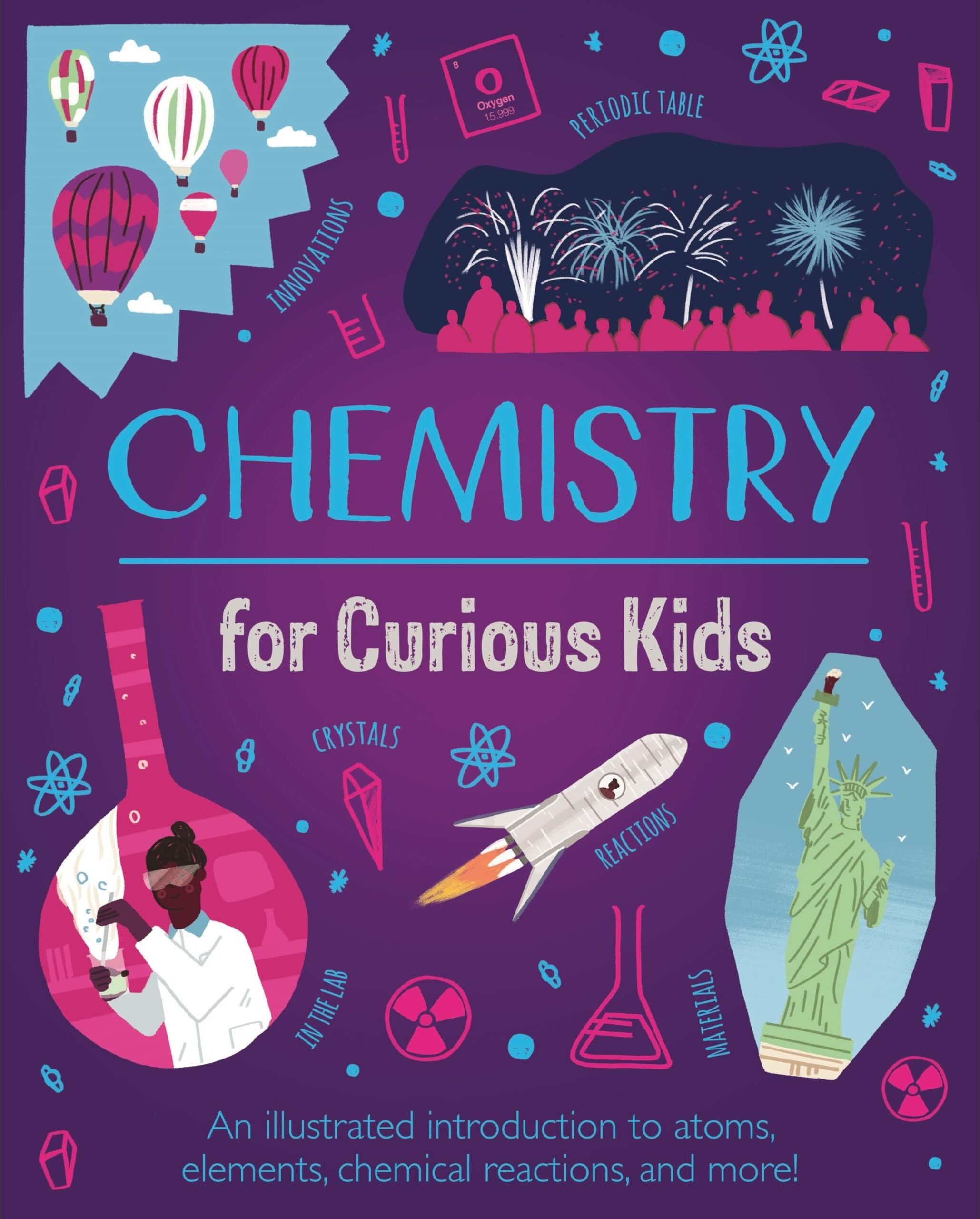
Arcturus Chemistry for Curious Kids: An Illustrated Introduction to Atoms, Elements, Chemical Reactions, and More! (Curious Kids, 2)Young readers can discover the wonders of chemistry with this accessible introduction, presented in a wonderful jacketed hardback format with full-colour illustrations. This inspirational book is packed with clear and engaging explanations of this fundamental topic, accompanied by beautiful illustrations by Alex Foster. Supporting STEM learning, this book is an ideal supplement to school education as it covers many core chemistry topics in an entertaining and easy-to-understand way. Big new concepts pop off the page thanks to vibrant diagrams and an engaging, energetic text. Kids will relish sharing them with friends and family! Young readers will love exploring exhilarating new ideas about: • Elements • Compounds • Molecules • Atoms • And much more! A great gift for readers aged 8-12.7,89 £*Shipping: 2,99 £Secure redirect to the provider
-
Canva Pro Education - 1 year SubscriptionWhen you make a purchase, you will receive an email inviting you to sign up for Canva Education , which will give you access to all the professional features of Canva Pro, plus 1,800 neutral Instagram post templates as a free gift Note: Brand Kite is not included How to Copy a Project from Your Personal Canva Account to a Canva Pro Class Account Discover the power of professional design with our annual Canva Pro subscription. With Canva Pro, you’ll have access to a wide range of premium tools and resources that will enable you to create stunning visual content for your business, your personal projects, and much more. Here’s what you can expect with a year’s subscription to Canva Pro: Unlimited access to over 100 million premium resources: Images, videos, audio, graphics and more – all ready to use in your projects. Customisable templates: Thousands of high-quality templates to suit every need, from presentations to social media posts, from leaflets to business cards. Advanced design tools: Features such as one-click background removal, the creation of custom brand kits, and the ability to resize your designs with a single click. Real-time collaboration: Work alongside your team, leaving comments and suggestions directly within projects, for seamless collaboration. Direct posting on social media: Schedule and publish your content directly from Canva across all the major social media platforms. Unlimited cloud storage: Save and organise all your projects in one place, with unlimited storage. Don’t miss the chance to take your design to the next level. With Canva Pro, the possibilities are endless. Subscribe now and start creating like a pro! How come the licence is priced so low? We offer retail licences that are used and discontinued by the previous owner since the EC ruling C-128/2011. That is why you can purchase the official licence on our site at a cheaper price. This is a product in STUDENT Version.7,00 £*Shipping: 0,00 £Secure redirect to the provider
-
Hodder Education Cambridge IGCSE And O Level History 3rd Edition Option B The 20th Century - Education - PaperbackTitle:. Cambridge IGCSE and O Level History 3rd Edition: Option B – The 20th Century. Format: Paperback Overview:. Delve into the transformative decades of modern history with the Cambridge IGCSE and O Level History 3rd Edition: Option B – The 20th Century. This essential student textbook is meticulously aligned with the latest Cambridge International Examinations (CIE) syllabuses 0470 and 2059, providing a comprehensive roadmap through the pivotal era that reshaped geopolitical boundaries, sparked global conflicts, and pioneered worldwide civil rights movements. The text systematically explores mandatory Option B topics, starting with German unification under Bismarck, moving through the complex alliances and trench warfare of World War One, and examining the fragile peace years sandwiched between two devastating global conflicts. Students are guided step-by-step through the rise of totalitarian regimes, the strategic and moral complexities of World War Two, and the prolonged ideological standoff of the Cold War. Packed with primary source analysis, vivid timelines, and contextual explanations, this volume transforms dense historical narratives into accessible learning modules designed specifically for international GCSE standards. The clear layout removes guesswork from syllabus coverage, ensuring every candidate understands the cause-and-effect relationships that define twentieth-century scholarship. What Makes This Book Stand Out:. Third-place textbooks often stumble between mere content dumping and simplified summaries, yet this edition strikes a masterful balance by embedding active examination preparation directly into every chapter. The standout feature is its relentless focus on the specific analytical skills demanded by Cambridge assessors. Each topic break concludes with targeted practice questions modelled exactly on past Paper One and Paper Two formats, allowing students to immediately test their comprehension and document evaluation abilities. Distinctive visual aids, including annotated archival photographs, political cartoons, and comparative tables, provide immediate context that traditional prose struggles to convey. Furthermore, the narrative structure explicitly highlights the historiographical debates surrounding major events, preparing discerning students to construct nuanced arguments rather than simply memorising dates. The consistent pedagogical framework—spanning clear assessment objectives mapping to progressive difficulty levels—means educators and independent learners alike can track progress accurately. By seamlessly weaving together chronological clarity with rigorous skill-building exercises, this resource elevates routine history reading into structured exam readiness. Who This Book Is Perfect For:. Designed primarily for sixteen-to-eighteen-year-old students pursuing Cambridge International General Certificate of Secondary Education qualifications, this textbook perfectly matches upper-secondary academic...34,00 £*Shipping: 2,99 £Secure redirect to the provider
-
What are oxygen atoms and carbon atoms?
Oxygen atoms are the building blocks of the element oxygen, which is essential for life and makes up a large portion of the Earth's atmosphere. Oxygen atoms have 8 protons and typically 8 neutrons, giving them a total atomic mass of 16. They are known for their ability to form strong bonds with other elements, making them crucial for the formation of molecules such as water and carbon dioxide. Carbon atoms are the building blocks of the element carbon, which is a fundamental component of all known life on Earth. Carbon atoms have 6 protons and typically 6 neutrons, giving them a total atomic mass of 12. They are known for their ability to form long chains and complex structures, making them essential for the formation of organic molecules such as proteins, carbohydrates, and DNA. **
-
Why are some atoms larger than other atoms?
Some atoms are larger than others because they have more protons, neutrons, and electrons, which increases their atomic mass and size. The number of electron shells and the distance of the outermost electrons from the nucleus also contribute to the size of an atom. Additionally, the arrangement of electrons in the electron shells can affect the size of an atom. Overall, the size of an atom is determined by a combination of its atomic number, electron configuration, and atomic mass. **
-
Will adding protons to atoms create different atoms?
No, adding protons to atoms will not create different atoms. The number of protons in an atom determines its identity as a specific element. Adding protons to an atom will change its identity and create a different element. However, adding protons to an atom can create a different isotope of the same element, which will have a different atomic mass but the same chemical properties. **
-
Do argon atoms form when chlorine atoms gain electrons?
No, argon atoms do not form when chlorine atoms gain electrons. When chlorine atoms gain an electron, they become chloride ions with a negative charge. Argon is a noble gas and already has a full outer electron shell, so it does not need to gain or lose electrons to achieve stability. **
Similar search terms for Atoms
-
Gamegenic The Academic 133+ XL Storage Box - 4 Drawers - Black - Black/BlackKeep your tabletop game accessories organised with The Academic 133+ XL in Black/Black. This premium storage box is designed to hold and organise tokens, dice, meeples, counters, and other frequently used gaming components. Four integrated drawers provide quick access to your accessories without requiring you to remove the entire storage unit from your game box. The compact format makes it a practical addition to a board-game collection, while the all-in-one design helps keep small components together between games. Key features: - All-in-one storage box for tabletop gaming accessories - Four integrated drawers for organised component storage - Suitable for tokens, dice, meeples, counters, and similar pieces - Compact design for convenient storage alongside board games - Black/Black colourway - Gamegenic product, supplied by Asmodee Product details: The Academic 133+ XL is supplied as a single storage accessory. Game components shown for illustration are not included.33,99 £*Shipping: 3,95 £Secure redirect to the provider
-
Gamegenic Tolarian Community College The Academic 266+ XL Deck Box - Black/PurpleThe Gamegenic Tolarian Community College The Academic 266+ XL is a premium, multifunctional deck box designed for organized card-game storage. Featuring a black and purple design with distinctive Tolarian Community College styling, this spacious interior holds more than 266 double-sleeved standard-sized cards, including those in extra-thick inner sleeves. The additional capacity also provides room for selected game accessories, helping keep essential items together for a game night or collection. Built with premium construction, The Academic 266+ XL is a versatile choice for players who want substantial card capacity in a distinctive deck box format suitable for home storage or use during play.62,99 £*Shipping: 0,00 £Secure redirect to the provider
-
Gamegenic Tolarian Community College The Academic 133+ XL Deck Box - Black/PurpleThe Gamegenic Tolarian Community College The Academic 133+ XL is a premium deck box designed for organized card storage and game-night convenience. Its spacious interior holds more than 133 double-sleeved standard-sized cards, including cards in extra-thick inner sleeves, while leaving room for essential accessories. The distinctive black and purple design combines practical protection with a striking Tolarian Community College-inspired appearance. The multifunctional format is suited to a wide range of trading card and tabletop games, helping players keep a deck and supporting components together between matches. Key features: - Holds 133+ double-sleeved cards - Compatible with extra-thick inner sleeves - Includes additional space for accessories - Premium multifunctional deck box design - Black and purple colourway - Suitable for a variety of card games35,99 £*Shipping: 3,95 £Secure redirect to the provider
-
Can atoms explode?
Atoms themselves cannot explode, as they are the building blocks of matter and are stable in their natural state. However, when atoms undergo a nuclear reaction, such as nuclear fission or fusion, a large amount of energy is released in the form of an explosion. This is what happens in nuclear bombs or nuclear power plants. So, while atoms themselves cannot explode, the reactions they undergo can result in explosive energy release. **
-
Are atoms universes?
No, atoms are not universes. Atoms are the basic building blocks of matter, consisting of a nucleus of protons and neutrons surrounded by a cloud of electrons. Universes, on the other hand, are vast and complex systems that contain galaxies, stars, planets, and other celestial bodies. While both atoms and universes are part of the natural world, they exist at vastly different scales and levels of complexity. **
-
What is the difference between metal atoms and magnesium atoms?
Metal atoms refer to a broad category of elements that exhibit metallic properties, such as being good conductors of heat and electricity. Magnesium atoms, on the other hand, specifically refer to atoms of the element magnesium, which is a metal known for its light weight and high strength-to-weight ratio. While magnesium atoms are a subset of metal atoms, they have unique properties and characteristics that distinguish them from other metals. **
-
Can all atoms be split or only atoms that are radioactive?
Only atoms that are radioactive can be split through a process called nuclear fission. This process involves splitting the nucleus of an atom into smaller parts, releasing a large amount of energy in the process. Not all atoms are radioactive, so only those specific atoms can undergo nuclear fission. **
* All prices are inclusive of VAT and, if applicable, plus shipping costs. The offer information is based on the details provided by the respective shop and is updated through automated processes. Real-time updates do not occur, so deviations can occur in individual cases. ** Note: Parts of this content were created by AI.