Buy dekan.eu ?
We are moving the project
dekan.eu .
Are you interested in purchasing the domain
dekan.eu ?
domain@kv-gmbh.de · 0541-91531010
Buy dekan.eu ?
What are two questions about molar mass?
Two questions about molar mass could be: 1. How is molar mass calculated for a compound? 2. Why is molar mass important in chemical reactions and stoichiometry? **
How does a two-mass oscillator system work?
A two-mass oscillator system consists of two masses connected by a spring and damper. When one mass is displaced from its equilibrium position, it exerts a force on the spring, causing the second mass to move. The spring then exerts a force on the second mass, which in turn affects the first mass, creating a back-and-forth motion between the masses. The damper helps dissipate the energy from the system, resulting in a controlled oscillation between the two masses. **


Similar search terms for Two-mass
Top-Angebote
Products related to Two-mass:
-
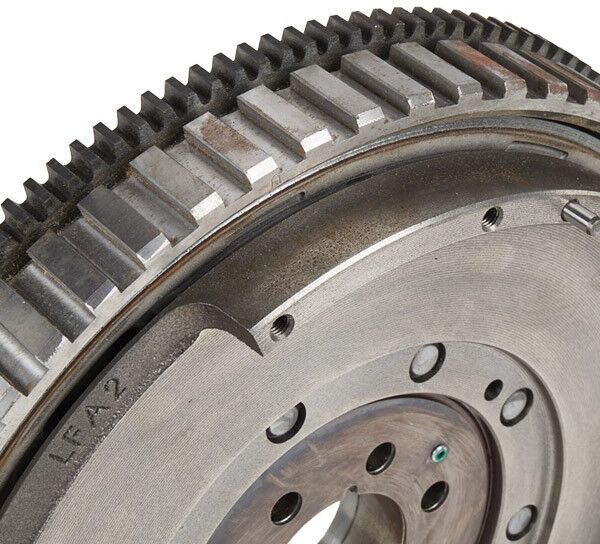
VALEO 836532 Dual mass flywheelEngine Features/Arrangement: for engines with dual-mass flywheel; Diameter: 228; Outer Diameter [mm]: 296; Number of mounting bores: 7; Thread Size: M9 x 1; Supplementary Article / Supplementary Info Info 2: with bolts/screws; Tightening Torque [Nm]: 55, 60; for flywheel depth [mm]: 37; Weight [kg]: 13,2; TecDoc Engine Number: 21224, 17028, 18287; Transmission Type: 6-Speed Manual Transmission, 5-Speed Manual Transmission; Engine Code: F9Q 670, F9Q 750, F9Q820, F9Q.6.70,F9Q.7.50, F9Q.7.54, F9Q.6.80,F9Q.8.20, F9Q.6.64, F9Q.6.50,F9Q.6.64, F9Q.6.50,F9Q.6.70, F9Q.8.20, F9Q.7.50; Construction Year to: 01/2005, 02/2005, 02/2006, 09/2007; Transmission Code: PK6; Construction Year from: 03/2005427,99 £*Shipping: 1,99 £Secure redirect to the provider
-
VALEO 836535 Dual mass flywheelEngine Features/Arrangement: for engines with dual-mass flywheel; Outer Diameter [mm]: 294; Number of mounting bores: 8; Supplementary Article / Supplementary Info Info 2: with bolts/screws; Tightening Torque [Nm]: 30; Tightening angle [degrees]: 90; for flywheel depth [mm]: 66; Weight [kg]: 12,83; Construction Year from: 04/1999, 06/2001, 01/2001, 10/1999, 02/2000, 01/2004, 02/2005, 01/2002, 09/2000, 09/2001, 01/2000, 09/2002; Construction Year to: 03/2004, 04/2004, 12/2003, 05/2002, 05/2005, 06/2005, 12/2005, 02/2006, 08/2002, 10/2005, 01/2006; TecDoc Engine Number: 10727, 16324, 16299, 33721, 17515, 33720; Transmission Code: ML5T, ML5, ML5E, ML5C, ML5CI, ML5C,ML5T, 5M, ML5C,ML5CI, ML5C,ML5T,ML5CI, ML5C,ML5T,ML5T/I, ML5T/I; Transmission Type: 5-Speed Manual Transmission; Engine Code: DW10ATED4, DW10BTED+, DW10ATED, DW10BTED, DW10ATED,DW10BTED+; for RPO number from: 10288; for RPO number up to: 10248, 10445, 10647; VET Number to: 10702396,99 £*Shipping: 1,99 £Secure redirect to the provider
-
VALEO 836538 Dual mass flywheelEngine Features/Arrangement: for engines with dual-mass flywheel; Diameter: 240; Outer Diameter [mm]: 289; Number of mounting bores: 7; Supplementary Article / Supplementary Info Info 2: with bolts/screws; Tightening Torque [Nm]: 55, 60; for flywheel depth [mm]: 44; Weight [kg]: 13,75; Transmission Type: 6-Speed Manual Transmission; TecDoc Engine Number: 21225, 18287, 19678; Engine Code: F9Q 674, F9Q820, F9Q758, F9Q 758, F9Q.6.70,F9Q.6.74, F9Q.7.50, F9Q.8.20, F9Q.6.74,F9Q.7.58, F9Q.6.70,F9Q.7.58, F9Q.7.58; Construction Year from: 02/2005, 03/2005; Construction Year to: 09/2007, 02/2006; Transmission Code: PK6344,99 £*Shipping: 1,99 £Secure redirect to the provider
-
VALEO 836543 Dual mass flywheelEngine Features/Arrangement: for engines with dual-mass flywheel; for flywheel manufacturer: LUK; Outer Diameter [mm]: 287; Number of mounting bores: 6; Tightening Torque [Nm]: 60; Tightening angle [degrees]: 90; for flywheel depth [mm]: 57; Weight [kg]: 12,36; Construction Year from: 09/2008; Construction Year to: 10/2010, 05/2010; TecDoc Engine Number: 20799, 23178, 24963, 20798, 23312; Vehicle Equipment: for vehicles without start-stop function, for vehicles without brake energy recovery; Transmission Type: 6-Speed Manual Transmission; Engine Code: CFFB, CBAB,CFFB, CBAA; Transmission Code: KUG,LMU, LMY,LQU, KUG365,99 £*Shipping: 1,99 £Secure redirect to the provider


-
What is the mass fraction of two isotopes?
The mass fraction of two isotopes is the ratio of the mass of one isotope to the total mass of the mixture of isotopes. It is calculated by dividing the mass of the specific isotope by the total mass of the mixture and multiplying by 100 to express it as a percentage. This fraction represents the proportion of the total mass that is made up by the specific isotope in the mixture. **
-
How can two masses be arranged at two angles to balance the third mass?
Two masses can be arranged at two angles to balance the third mass by using the principles of torque and equilibrium. The two masses can be placed at different distances from the pivot point, and at angles that create equal and opposite torques. This will result in a balanced system where the third mass can be placed at a specific distance and angle to achieve equilibrium. By carefully calculating the distances and angles, the system can be balanced and the third mass can be supported without tipping. **
-
Is there a mass die-off two years after vaccination?
There is no evidence to suggest that there is a mass die-off two years after vaccination. Vaccines are rigorously tested for safety and efficacy before being approved for use, and extensive monitoring continues after vaccination to ensure ongoing safety. Any adverse events following vaccination are carefully investigated, and the vast majority of people experience no serious side effects from vaccines. It is important to rely on credible sources of information, such as public health authorities and medical experts, when evaluating the safety and effectiveness of vaccines. **
-
What is the difference between atomic mass, molecular mass, and molar mass?
Atomic mass refers to the mass of a single atom of an element, typically measured in atomic mass units (amu). Molecular mass is the mass of a single molecule of a compound, also measured in amu. Molar mass, on the other hand, is the mass of one mole of a substance and is expressed in grams per mole (g/mol). It is calculated by adding up the atomic masses of all the atoms in a molecule or formula unit. **

Why do two objects of different mass attract each other with the same force?
Two objects of different mass attract each other with the same force because of the universal law of gravitation, which states that the force of gravity between two objects is directly proportional to the product of their masses and inversely proportional to the square of the distance between their centers. This means that the force of gravity depends on the masses of the objects involved, but not on their individual masses. Therefore, regardless of their mass, two objects will attract each other with the same force as long as their distance remains constant. **
Is mass spectrometry the same as mass spectrometry?
It seems like there might be a typo in your question. Mass spectrometry is a scientific technique used to identify and quantify molecules based on their mass-to-charge ratio. It is not the same as mass spectrometry because they are the same thing. If you meant to ask about the difference between mass spectrometry and another technique or concept, please provide more information so I can give you a more accurate answer. **
Top-Angebote
Products related to Two-mass:
-
Atomic Mass Games STAP Riders Expansion - Two Miniatures and Unit CardsAdd fast-moving Separatist support to your Star Wars: Legion battles with the STAP Riders expansion. These sleek repulsor-bikes are designed to move rapidly across the battlefield, helping your force reach exposed positions and apply pressure where it is needed most. The set includes two detailed STAP Rider miniatures, forming one Support unit for a Separatist army. It also contains the unit cards and gameplay components required to field them in your games. Use their speed to scout ahead, manoeuvre around threats, support an advance, or make a timely flanking move. Key features: - Two finely detailed STAP Rider miniatures - Components for one Support unit - Unit cards and gameplay components This expansion requires the Star Wars: Legion core game to play. Miniatures may require assembly and painting. Suitable for hobbyists and players building a Separatist force.34,99 £*Shipping: 3,95 £Secure redirect to the provider
-
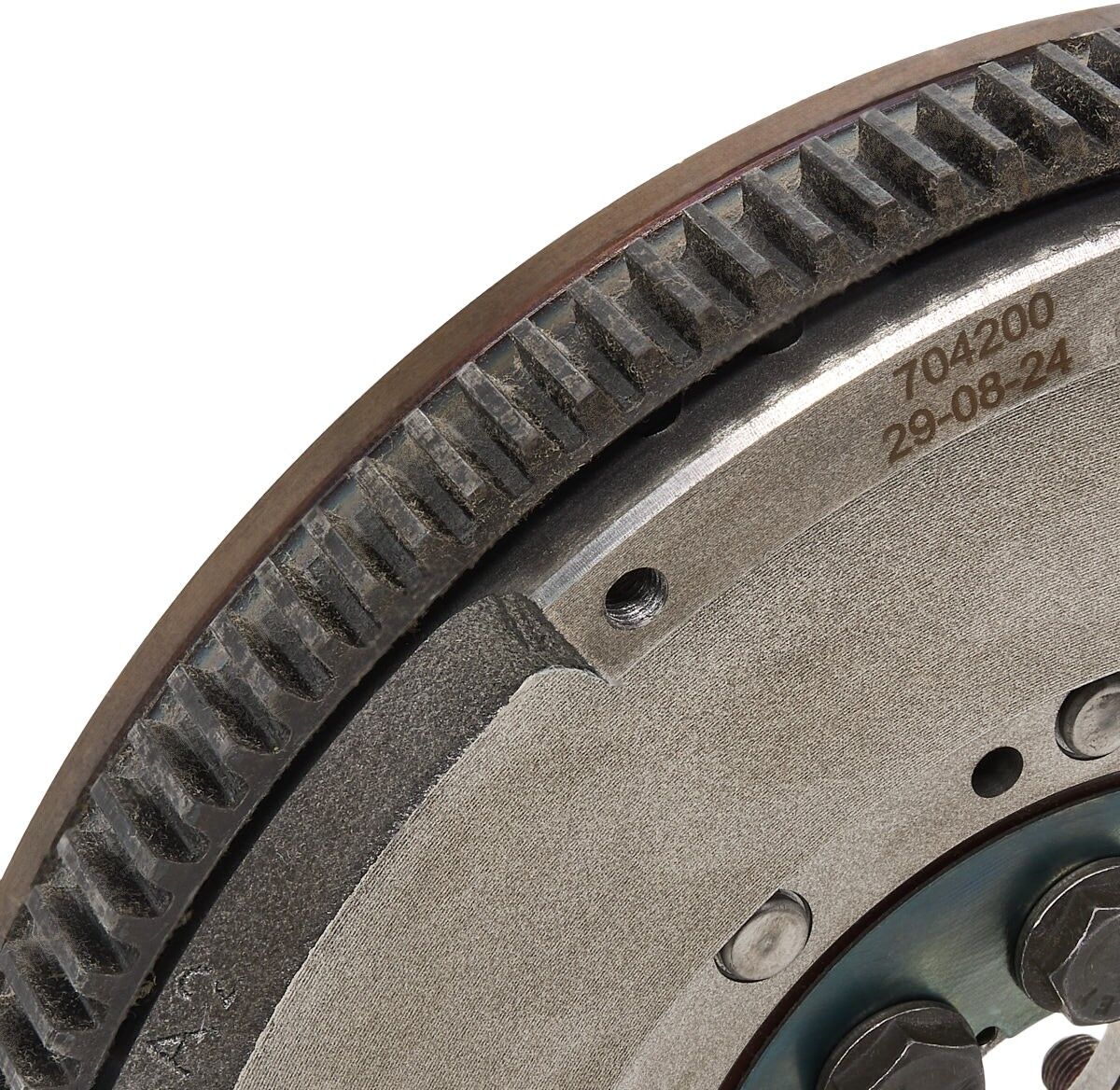
VALEO 836519 Dual mass flywheelEngine Features/Arrangement: for engines with dual-mass flywheel; Diameter: 260; Number of mounting bores: 8; Supplementary Article / Supplementary Info Info 2: without screw set; Tightening Torque [Nm]: 35; Weight [kg]: 13,76; Construction Year from: 07/2006; Construction Year to: 10/2011, 05/2014; Engine Code: 4HU (P22DTE), PUMA 120; Transmission Code: MLGU-6, MLGUC,MLGU-6; Transmission Type: 6-Speed Manual Transmission358,99 £*Shipping: 1,99 £Secure redirect to the provider
-
VALEO 836532 Dual mass flywheelEngine Features/Arrangement: for engines with dual-mass flywheel; Diameter: 228; Outer Diameter [mm]: 296; Number of mounting bores: 7; Thread Size: M9 x 1; Supplementary Article / Supplementary Info Info 2: with bolts/screws; Tightening Torque [Nm]: 55, 60; for flywheel depth [mm]: 37; Weight [kg]: 13,2; TecDoc Engine Number: 21224, 17028, 18287; Transmission Type: 6-Speed Manual Transmission, 5-Speed Manual Transmission; Engine Code: F9Q 670, F9Q 750, F9Q820, F9Q.6.70,F9Q.7.50, F9Q.7.54, F9Q.6.80,F9Q.8.20, F9Q.6.64, F9Q.6.50,F9Q.6.64, F9Q.6.50,F9Q.6.70, F9Q.8.20, F9Q.7.50; Construction Year to: 01/2005, 02/2005, 02/2006, 09/2007; Transmission Code: PK6; Construction Year from: 03/2005427,99 £*Shipping: 1,99 £Secure redirect to the provider
-
VALEO 836535 Dual mass flywheelEngine Features/Arrangement: for engines with dual-mass flywheel; Outer Diameter [mm]: 294; Number of mounting bores: 8; Supplementary Article / Supplementary Info Info 2: with bolts/screws; Tightening Torque [Nm]: 30; Tightening angle [degrees]: 90; for flywheel depth [mm]: 66; Weight [kg]: 12,83; Construction Year from: 04/1999, 06/2001, 01/2001, 10/1999, 02/2000, 01/2004, 02/2005, 01/2002, 09/2000, 09/2001, 01/2000, 09/2002; Construction Year to: 03/2004, 04/2004, 12/2003, 05/2002, 05/2005, 06/2005, 12/2005, 02/2006, 08/2002, 10/2005, 01/2006; TecDoc Engine Number: 10727, 16324, 16299, 33721, 17515, 33720; Transmission Code: ML5T, ML5, ML5E, ML5C, ML5CI, ML5C,ML5T, 5M, ML5C,ML5CI, ML5C,ML5T,ML5CI, ML5C,ML5T,ML5T/I, ML5T/I; Transmission Type: 5-Speed Manual Transmission; Engine Code: DW10ATED4, DW10BTED+, DW10ATED, DW10BTED, DW10ATED,DW10BTED+; for RPO number from: 10288; for RPO number up to: 10248, 10445, 10647; VET Number to: 10702396,99 £*Shipping: 1,99 £Secure redirect to the provider
-
What are two questions about molar mass?
Two questions about molar mass could be: 1. How is molar mass calculated for a compound? 2. Why is molar mass important in chemical reactions and stoichiometry? **
-
How does a two-mass oscillator system work?
A two-mass oscillator system consists of two masses connected by a spring and damper. When one mass is displaced from its equilibrium position, it exerts a force on the spring, causing the second mass to move. The spring then exerts a force on the second mass, which in turn affects the first mass, creating a back-and-forth motion between the masses. The damper helps dissipate the energy from the system, resulting in a controlled oscillation between the two masses. **
-
What is the mass fraction of two isotopes?
The mass fraction of two isotopes is the ratio of the mass of one isotope to the total mass of the mixture of isotopes. It is calculated by dividing the mass of the specific isotope by the total mass of the mixture and multiplying by 100 to express it as a percentage. This fraction represents the proportion of the total mass that is made up by the specific isotope in the mixture. **
-
How can two masses be arranged at two angles to balance the third mass?
Two masses can be arranged at two angles to balance the third mass by using the principles of torque and equilibrium. The two masses can be placed at different distances from the pivot point, and at angles that create equal and opposite torques. This will result in a balanced system where the third mass can be placed at a specific distance and angle to achieve equilibrium. By carefully calculating the distances and angles, the system can be balanced and the third mass can be supported without tipping. **
Similar search terms for Two-mass
-
VALEO 836538 Dual mass flywheelEngine Features/Arrangement: for engines with dual-mass flywheel; Diameter: 240; Outer Diameter [mm]: 289; Number of mounting bores: 7; Supplementary Article / Supplementary Info Info 2: with bolts/screws; Tightening Torque [Nm]: 55, 60; for flywheel depth [mm]: 44; Weight [kg]: 13,75; Transmission Type: 6-Speed Manual Transmission; TecDoc Engine Number: 21225, 18287, 19678; Engine Code: F9Q 674, F9Q820, F9Q758, F9Q 758, F9Q.6.70,F9Q.6.74, F9Q.7.50, F9Q.8.20, F9Q.6.74,F9Q.7.58, F9Q.6.70,F9Q.7.58, F9Q.7.58; Construction Year from: 02/2005, 03/2005; Construction Year to: 09/2007, 02/2006; Transmission Code: PK6344,99 £*Shipping: 1,99 £Secure redirect to the provider
-
VALEO 836543 Dual mass flywheelEngine Features/Arrangement: for engines with dual-mass flywheel; for flywheel manufacturer: LUK; Outer Diameter [mm]: 287; Number of mounting bores: 6; Tightening Torque [Nm]: 60; Tightening angle [degrees]: 90; for flywheel depth [mm]: 57; Weight [kg]: 12,36; Construction Year from: 09/2008; Construction Year to: 10/2010, 05/2010; TecDoc Engine Number: 20799, 23178, 24963, 20798, 23312; Vehicle Equipment: for vehicles without start-stop function, for vehicles without brake energy recovery; Transmission Type: 6-Speed Manual Transmission; Engine Code: CFFB, CBAB,CFFB, CBAA; Transmission Code: KUG,LMU, LMY,LQU, KUG365,99 £*Shipping: 1,99 £Secure redirect to the provider
-
VALEO 836544 Dual mass flywheelEngine Features/Arrangement: for engines with dual-mass flywheel; for flywheel manufacturer: SACHS; Outer Diameter [mm]: 288; Number of mounting bores: 6; Supplementary Article / Supplementary Info Info 2: with bolts/screws; Tightening Torque [Nm]: 60; Tightening angle [degrees]: 50; for flywheel depth [mm]: 59; Weight [kg]: 11,88; Transmission Code: LNZ, LPR, LQU,NFZ, KXV, NFR, LHD,NFP, LNM, LHD, NFU, NFV, NGH, NFZ, LNN, MQW, JYK,KMZ,KWD,KXD,PNU, MQ-350, GRF,HDU,KXW,LHD,NFP, NFP, JYK, JLT,KXW,LHD,NFP, KUG,LMU, LHD,LNZ, LQU, LMU, MDZ, LNN,NFQ, LNM,NFR, LNZ,MAY, LWR, MAY, MKH, NFQ, NFX, KNW,LNM,NFR; Transmission Type: 6-Speed Manual Transmission, 5-Speed Manual Transmission, 7-Speed Dual-Clutch Transmission; Vehicle Equipment: for vehicles without start-stop function, for vehicles with start-stop function, for vehicles without brake energy recovery; Engine Code: CFFB, CKRA, CFHF, CAYC, CLCB, CFHC, CFFA, CFHB, BLS,BXE, BKC, BLS, BXE, BKD,CFHC, BKD, BXF,BXJ, CBAB,CFFB, CJAA, CFHB,CFHC,CJAA,CLCB, CFHC,CLCB, CFHE; Construction Year from: 11/2010, 01/2010, 02/2010, 02/2011, 05/2013, 05/2010, 03/2010, 05/2011, 10/2010, 06/2010, 11/2009, 09/2010; TecDoc Engine Number: 18224, 23178, 24315, 23179, 24600, 17500, 23587, 24598, 23585, 24839, 25438, 23859, 23938, 17080, 21070, 17468, 18907, 20493, 16862, 22715, 24314, 17357, 24326, 20799, 24963, 20798, 23312, 22678, 23589, 23590, 22639, 34096, 34066, 23586, 24215, 33113, 24366; Construction Year to: 04/2013, 05/2014, 05/2011, 09/2015, 12/2014, 05/2015; for PR number: 0EN; Vehicle Identification Number (VIN) from: 5P_B_000001, 1K_C_000001; for model code/type code: 5N1, 5N2; for model code: 5N1, 5N2319,99 £*Shipping: 1,99 £Secure redirect to the provider
-
VALEO 836552 Dual mass flywheelEngine Features/Arrangement: for engines with dual-mass flywheel; for flywheel manufacturer: SACHS; Diameter: 240; Outer Diameter [mm]: 287; Number of mounting bores: 8; Supplementary Article / Supplementary Info Info 2: with bolts/screws; Tightening Torque [Nm]: 60; Tightening angle [degrees]: 50; for flywheel depth [mm]: 62; Weight [kg]: 12,09; Engine Code: CDAA, CCZB, CDAB, CCZD, AXX, BPY, BWA, CAWB, CBFA, CCTA, CCZA, BZB, CHHB, CULA, CULC, CULB, CHHA, CZPA, CZPB, DKZA, CCZC, CBFA,CCTA,CCZA, CAWB,CCZA, CAWB,CCTA,CCZA, CAWA,CCTB,CCZC, CFFB, CEAA, CUGA, CUFA; Transmission Type: 6-Speed Manual Transmission, for 7-speed dual-clutch transmission; for PR number: 0EN; TecDoc Engine Number: 20797, 20795, 22172, 17450, 19199, 20714, 22170, 18540, 18883, 18541, 20732, 20395, 22171, 20089, 20090, 20938, 19901, 19902, 21590, 20733, 20796, 24964, 20902, 20943, 23735, 22641, 27976, 35413, 31415, 27977, 30933, 30934, 27809, 31649, 33138, 36162; Construction Year from: 06/2005, 11/2007, 06/2010, 06/2008, 05/2008, 07/2008, 03/2009, 03/2008, 11/2010, 08/2008, 08/2016; Construction Year to: 11/2008, 12/2014, 11/2013, 07/2014, 09/2015, 05/2013, 01/2009, 12/2010, 07/2020; Transmission Code: FUQ, KNU, MDL, KSC,LHC, KSC, KZS, LHC, KZS,MDL, LMV, KZS,MWS, KNU,KZS, KVT,MDP, KVB,LGZ,LMV,LMW, KVD,LGZ,LMV,LMW, LHD, KDQ, LMT, QUH, QJQ, SNG; Left-/right-hand drive vehicles: for left-hand drive vehicles360,99 £*Shipping: 1,99 £Secure redirect to the provider
-
Is there a mass die-off two years after vaccination?
There is no evidence to suggest that there is a mass die-off two years after vaccination. Vaccines are rigorously tested for safety and efficacy before being approved for use, and extensive monitoring continues after vaccination to ensure ongoing safety. Any adverse events following vaccination are carefully investigated, and the vast majority of people experience no serious side effects from vaccines. It is important to rely on credible sources of information, such as public health authorities and medical experts, when evaluating the safety and effectiveness of vaccines. **
-
What is the difference between atomic mass, molecular mass, and molar mass?
Atomic mass refers to the mass of a single atom of an element, typically measured in atomic mass units (amu). Molecular mass is the mass of a single molecule of a compound, also measured in amu. Molar mass, on the other hand, is the mass of one mole of a substance and is expressed in grams per mole (g/mol). It is calculated by adding up the atomic masses of all the atoms in a molecule or formula unit. **
-
Why do two objects of different mass attract each other with the same force?
Two objects of different mass attract each other with the same force because of the universal law of gravitation, which states that the force of gravity between two objects is directly proportional to the product of their masses and inversely proportional to the square of the distance between their centers. This means that the force of gravity depends on the masses of the objects involved, but not on their individual masses. Therefore, regardless of their mass, two objects will attract each other with the same force as long as their distance remains constant. **
-
Is mass spectrometry the same as mass spectrometry?
It seems like there might be a typo in your question. Mass spectrometry is a scientific technique used to identify and quantify molecules based on their mass-to-charge ratio. It is not the same as mass spectrometry because they are the same thing. If you meant to ask about the difference between mass spectrometry and another technique or concept, please provide more information so I can give you a more accurate answer. **
* All prices are inclusive of VAT and, if applicable, plus shipping costs. The offer information is based on the details provided by the respective shop and is updated through automated processes. Real-time updates do not occur, so deviations can occur in individual cases. ** Note: Parts of this content were created by AI.