Buy dekan.eu ?
We are moving the project
dekan.eu .
Are you interested in purchasing the domain
dekan.eu ?
domain@kv-gmbh.de · 0541-91531010
Buy dekan.eu ?
What is an acid residue ion, an oxonium ion, and a hydronium ion?
An acid residue ion is a fragment of a molecule that remains after a hydrogen ion is removed from an acid. An oxonium ion is a positively charged ion formed by the addition of a proton to an oxygen atom. A hydronium ion is a positively charged ion formed by the combination of a water molecule with an extra proton, commonly found in aqueous solutions of acids. **
What are the oxonium ion and the hydroxide ion?
The oxonium ion is a positively charged ion formed when a water molecule gains a hydrogen ion, resulting in the formula H3O+. This ion is commonly found in acidic solutions. On the other hand, the hydroxide ion is a negatively charged ion formed when a water molecule loses a hydrogen ion, resulting in the formula OH-. This ion is commonly found in basic solutions. Both ions play important roles in acid-base chemistry. **

Similar search terms for Ion
Top-Angebote
Products related to Ion:
-
Xtar MC4S Charger for Li-ion BatteriesHighly efficient, the new Xtar MC4S charges up to four Ni-MH, Ni-CD or Li-ion batteries at once. It represents excellent value and is a respected leader in its category. This pack includes a USB-C to USB-C power cable; however, a USB wall adapter is not included in this set, but the option to add one on is available in the bundles section above. We recommend if you are going to use your own adaptor, to check that it is 15W as this is required for optimal performance. Convenient to use worldwide, this charger is compatible with wall adapters, smartphone and solar chargers as well as power banks and computers. To ensure your batteries receive high-quality charging, Xtar have included a self-selected 0V trickle charge phase especially for totally discharged cells, to maximise battery life. It will also automatically switch between constant current fast charge, to constant voltage phase when the batteries are near the end of their charging cycle, for full battery potential. Additional features include: Recharges 3.6V and 3.7V Li-ion, IMR, INR and ICR specialist cells, including size codes 10440, 14500, 14650, 16340, 17500, 17670, 18350, 18490, 18500, 18650, 18700, 20700, 21700, 22650, 25500 and 26650. Accepts two 26650 batteries (CH1 and CH4) and two unprotected type 21700 batteries (in CH2 and CH3) simultaneously. Not for use with protected type 20700 and 21700 cells. Charging current of 1 Amp (through two ports) or 0.5A (through four ports). The higher the Amp, the quicker the battery will charge, with a maximum potential: 4.2 Volts. Operating temperature range: 0°C (minimum) to 40° Celsius (maximum). Flame-retardant casing. Xtar have also ensured this charger has protection against reversed polarity, overcharge, short circuit, excess current and over-temperature to ensure safe charging. Charging current and maximum supported battery capacity Information 3.6V/3.7V Li-ion charging current: 0.5A or 1A × 2 (applies when charging 2 batteries) Max capacity: No limit — charger detects full charge via battery voltage; display caps at 9,999mAh but full charging is unaffected. so ensured this charger has protection against reversed polarity, overcharge, short circuit, excess current and over-temperature to ensure safe charging. Dimensions: 100mm (length) x 97mm (width) x 26.5 millimetres (height). Net weight: 95 grammes. OPTIONAL BUNDLE: None, Inc. Wall Adapter13,95 £*Shipping: 2,49 £Secure redirect to the provider
-
Uplift Treasures Portable Handheld Lithium Ion Work Light For Automotive Repair Portable Handheld Lithium Ion Work Light For Automotive RepairProduct Description:Bring convenient lighting to vehicle repairs and everyday maintenance with this portable handheld work light. Its lithium ion battery power and compact design make it easy to carry and position while inspecting your work...123,97 $*Shipping: 0,00 $Secure redirect to the provider
-
Xtar VC2SL Fast Charger for Li-ion BatteriesThe Xtar VC2S Fast Charger for Li-ion batteries is innovative, compact and ideal for travelling with its 5V micro-USB connector and its ability to share a power adapter with a smartphone. A USB adapter is not included; however, one can be added onto your order in the ‘optional bundle’ section above. A USB adaptor must be 15W for this charger to operate correctly. Xtar have used latest technology to ensure that this charger is easy to use, with the latest LCD colour panel displaying the recharge status of your batteries, alongside red and green LED channel indicators. Both digital and analogue readouts are also given, stating the real-time current, internal resistance and the capacity of each cell being charged. The charger also has the following features: Recharges: 3.6/3.7V Li-ion, IMR, INR and ICR batteries and types 10440, 14500, 14650, 16340, 17335, 17500, 17670, 18350, 18490, 18500, 18650, 18700, 22650, 25500 and 26650. Additionally, the VC2S can recharge unprotected 21700 and 201700 cells. Can bring batteries back to life with its 0V activation function. Three-stage charging cycle as well as a soft start feature which optimises battery performance and life. Portable power bank option. Can identify the cell type automatically. Warns you of reverse polarity. Charging current and maximum supported battery capacity Information 3.6V/3.7V Li-ion charging current: 2A × 2 / 3A × 1 (applies when charging 1–2 batteries) Max capacity: No limit — charger detects full charge via battery voltage; display caps at 9,999mAh but full charging is unaffected. The output currents are adjustable. When one cell is under charge, the output will be 2 Amps. When there are two cells under charge, the output is 1 Amp for each cell. The greater the number of Amps, the less time it will take to charge your battery. Dimensions: 12.9cm X 6.7cm X3.2cm. Weight: 115g. Recommended operating temperature of 0°C - 40°C This charger does not come with a wall adaptor and we recommend adding the QC3.0 to the bundle when purchasing. This charger cannot be powered by a low power mobile phone charger and needs a 15W or 3A wall adaptor like a USB-C laptop or large tablet adaptor. OPTIONAL BUNDLE: None, Inc. Wall Adapter13,95 £*Shipping: 2,49 £Secure redirect to the provider


-
What is an oxonium ion and a hydroxide ion?
An oxonium ion is a positively charged ion formed by the combination of a water molecule and a hydrogen ion (H+). It is also known as a hydronium ion and is commonly found in acidic solutions. A hydroxide ion, on the other hand, is a negatively charged ion composed of one oxygen and one hydrogen atom (OH-). It is a key component of basic solutions and is responsible for the alkaline properties of substances such as sodium hydroxide. Both oxonium and hydroxide ions play important roles in the pH and chemical properties of solutions. **
-
What is an ion?
An ion is an atom or molecule that has gained or lost one or more electrons, giving it a positive or negative charge. When an atom loses an electron, it becomes a positively charged ion called a cation. Conversely, when an atom gains an electron, it becomes a negatively charged ion called an anion. Ions play a crucial role in chemical reactions and are essential for various biological processes in living organisms. **
-
What is the difference between the carbonate ion and the bicarbonate ion?
The main difference between the carbonate ion (CO3^2-) and the bicarbonate ion (HCO3^-) is the number of hydrogen atoms present. The carbonate ion has a charge of -2 and does not contain any hydrogen atoms, while the bicarbonate ion has a charge of -1 and contains one hydrogen atom. Bicarbonate is a conjugate base of carbonic acid, while carbonate is a polyatomic ion on its own. **
-
What is the difference between a hydronium ion and an oxonium ion?
A hydronium ion (H3O+) is formed when a water molecule (H2O) gains a hydrogen ion (H+), resulting in a positively charged ion. On the other hand, an oxonium ion (also known as a protonated alcohol) is formed when an alcohol molecule gains a proton, resulting in a positively charged ion. While both ions have a positive charge, hydronium ions are specifically formed in aqueous solutions, whereas oxonium ions are formed in the context of organic chemistry reactions involving alcohols. **
How are lattice energy, ion charge, ion radius, and melting temperature related?
Lattice energy is the energy required to separate an ionic solid into its constituent ions. It is directly related to the ion charges and inversely related to the ion radius. Higher ion charges and smaller ion radii result in higher lattice energies. As lattice energy increases, so does the melting temperature of the ionic solid. This is because the stronger the ionic bonds (as indicated by higher lattice energy), the more energy is required to break those bonds, resulting in a higher melting temperature. **
What is the difference between the carbonate ion and the hydrogen carbonate ion?
The carbonate ion (CO3^2-) has a charge of -2 and consists of three oxygen atoms bonded to a central carbon atom. In contrast, the hydrogen carbonate ion (HCO3^-) has a charge of -1 and consists of one hydrogen atom, one carbon atom, and three oxygen atoms. The hydrogen carbonate ion is derived from the carbonate ion by the addition of a hydrogen ion, making it a conjugate acid of the carbonate ion. **
Top-Angebote
Products related to Ion:
-
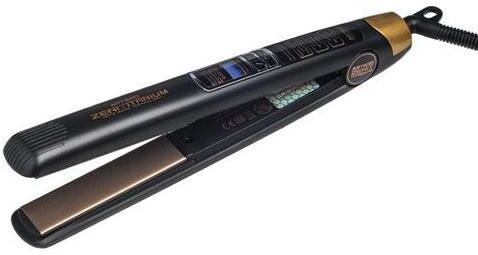
Artero Zenit Ion Nano Titanium ClassicHealth and Beauty Electric appliances Artero Zenit Ion Nano Titanium Classic Iron that reaches 230 C Titanium plates with advanced technology: Faster straightening, smoother plates, and better results. Especially for keratin treatments. High-tech titanium floating plates that generate negative ions, providing more shine and smoothness to the hair. It seals split ends and moisturizes hair. ADAPTABLE REQUIRES EUROPEAN PLUG + voltage (220).77,96 £*Shipping: 4,99 £Secure redirect to the provider
-
Paul Mitchell Express Ion Round Brush - SmallSculpt. Set. Style. The perfect blow out awaits with the Paul Mitchell Ion Round Brush. What It Does Tames unruly strands and delivers a smooth, polished, frizz-free look. How It Works The aluminum barrel retains heat while blow-drying, helping to sculpt and set your style. Infused with Express Ion Complex™, the barrel and bristles work together to accelerate drying time and eliminate static. The innovative corkscrew-shaped bristles in this brush glide through hair effortlessly, enhancing shine and smoothness. Why You'll Love It Cuts down on drying time while leaving hair sleek, shiny, and under control.20,42 £*Shipping: 2,95 £Secure redirect to the provider
-
Xtar MC4S Charger for Li-ion BatteriesHighly efficient, the new Xtar MC4S charges up to four Ni-MH, Ni-CD or Li-ion batteries at once. It represents excellent value and is a respected leader in its category. This pack includes a USB-C to USB-C power cable; however, a USB wall adapter is not included in this set, but the option to add one on is available in the bundles section above. We recommend if you are going to use your own adaptor, to check that it is 15W as this is required for optimal performance. Convenient to use worldwide, this charger is compatible with wall adapters, smartphone and solar chargers as well as power banks and computers. To ensure your batteries receive high-quality charging, Xtar have included a self-selected 0V trickle charge phase especially for totally discharged cells, to maximise battery life. It will also automatically switch between constant current fast charge, to constant voltage phase when the batteries are near the end of their charging cycle, for full battery potential. Additional features include: Recharges 3.6V and 3.7V Li-ion, IMR, INR and ICR specialist cells, including size codes 10440, 14500, 14650, 16340, 17500, 17670, 18350, 18490, 18500, 18650, 18700, 20700, 21700, 22650, 25500 and 26650. Accepts two 26650 batteries (CH1 and CH4) and two unprotected type 21700 batteries (in CH2 and CH3) simultaneously. Not for use with protected type 20700 and 21700 cells. Charging current of 1 Amp (through two ports) or 0.5A (through four ports). The higher the Amp, the quicker the battery will charge, with a maximum potential: 4.2 Volts. Operating temperature range: 0°C (minimum) to 40° Celsius (maximum). Flame-retardant casing. Xtar have also ensured this charger has protection against reversed polarity, overcharge, short circuit, excess current and over-temperature to ensure safe charging. Charging current and maximum supported battery capacity Information 3.6V/3.7V Li-ion charging current: 0.5A or 1A × 2 (applies when charging 2 batteries) Max capacity: No limit — charger detects full charge via battery voltage; display caps at 9,999mAh but full charging is unaffected. so ensured this charger has protection against reversed polarity, overcharge, short circuit, excess current and over-temperature to ensure safe charging. Dimensions: 100mm (length) x 97mm (width) x 26.5 millimetres (height). Net weight: 95 grammes. OPTIONAL BUNDLE: None, Inc. Wall Adapter13,95 £*Shipping: 2,49 £Secure redirect to the provider
-
Uplift Treasures Portable Handheld Lithium Ion Work Light For Automotive Repair Portable Handheld Lithium Ion Work Light For Automotive RepairProduct Description:Bring convenient lighting to vehicle repairs and everyday maintenance with this portable handheld work light. Its lithium ion battery power and compact design make it easy to carry and position while inspecting your work...123,97 $*Shipping: 0,00 $Secure redirect to the provider
-
What is an acid residue ion, an oxonium ion, and a hydronium ion?
An acid residue ion is a fragment of a molecule that remains after a hydrogen ion is removed from an acid. An oxonium ion is a positively charged ion formed by the addition of a proton to an oxygen atom. A hydronium ion is a positively charged ion formed by the combination of a water molecule with an extra proton, commonly found in aqueous solutions of acids. **
-
What are the oxonium ion and the hydroxide ion?
The oxonium ion is a positively charged ion formed when a water molecule gains a hydrogen ion, resulting in the formula H3O+. This ion is commonly found in acidic solutions. On the other hand, the hydroxide ion is a negatively charged ion formed when a water molecule loses a hydrogen ion, resulting in the formula OH-. This ion is commonly found in basic solutions. Both ions play important roles in acid-base chemistry. **
-
What is an oxonium ion and a hydroxide ion?
An oxonium ion is a positively charged ion formed by the combination of a water molecule and a hydrogen ion (H+). It is also known as a hydronium ion and is commonly found in acidic solutions. A hydroxide ion, on the other hand, is a negatively charged ion composed of one oxygen and one hydrogen atom (OH-). It is a key component of basic solutions and is responsible for the alkaline properties of substances such as sodium hydroxide. Both oxonium and hydroxide ions play important roles in the pH and chemical properties of solutions. **
-
What is an ion?
An ion is an atom or molecule that has gained or lost one or more electrons, giving it a positive or negative charge. When an atom loses an electron, it becomes a positively charged ion called a cation. Conversely, when an atom gains an electron, it becomes a negatively charged ion called an anion. Ions play a crucial role in chemical reactions and are essential for various biological processes in living organisms. **
Similar search terms for Ion
-
Xtar VC2SL Fast Charger for Li-ion BatteriesThe Xtar VC2S Fast Charger for Li-ion batteries is innovative, compact and ideal for travelling with its 5V micro-USB connector and its ability to share a power adapter with a smartphone. A USB adapter is not included; however, one can be added onto your order in the ‘optional bundle’ section above. A USB adaptor must be 15W for this charger to operate correctly. Xtar have used latest technology to ensure that this charger is easy to use, with the latest LCD colour panel displaying the recharge status of your batteries, alongside red and green LED channel indicators. Both digital and analogue readouts are also given, stating the real-time current, internal resistance and the capacity of each cell being charged. The charger also has the following features: Recharges: 3.6/3.7V Li-ion, IMR, INR and ICR batteries and types 10440, 14500, 14650, 16340, 17335, 17500, 17670, 18350, 18490, 18500, 18650, 18700, 22650, 25500 and 26650. Additionally, the VC2S can recharge unprotected 21700 and 201700 cells. Can bring batteries back to life with its 0V activation function. Three-stage charging cycle as well as a soft start feature which optimises battery performance and life. Portable power bank option. Can identify the cell type automatically. Warns you of reverse polarity. Charging current and maximum supported battery capacity Information 3.6V/3.7V Li-ion charging current: 2A × 2 / 3A × 1 (applies when charging 1–2 batteries) Max capacity: No limit — charger detects full charge via battery voltage; display caps at 9,999mAh but full charging is unaffected. The output currents are adjustable. When one cell is under charge, the output will be 2 Amps. When there are two cells under charge, the output is 1 Amp for each cell. The greater the number of Amps, the less time it will take to charge your battery. Dimensions: 12.9cm X 6.7cm X3.2cm. Weight: 115g. Recommended operating temperature of 0°C - 40°C This charger does not come with a wall adaptor and we recommend adding the QC3.0 to the bundle when purchasing. This charger cannot be powered by a low power mobile phone charger and needs a 15W or 3A wall adaptor like a USB-C laptop or large tablet adaptor. OPTIONAL BUNDLE: None, Inc. Wall Adapter13,95 £*Shipping: 2,49 £Secure redirect to the provider
-
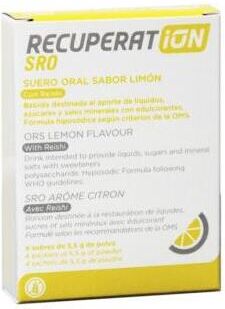
Recuperat-Ion Lemon Flavor Oral Serum 4 SachetsNutrition and Supplements Special supplements Recuperat-Ion Lemon Flavor Oral Serum 4 Sachets Recovert-ion SRO is an oral rehydration solution, formulated following the criteria of the World Health Organization and the main world associations of Pediatric Medicine indicated for the prevention of dehydration of digestive origin. It also provides Reishi, a plant extract that helps the immune system while reconstituting damaged intestinal flora. Instructions for use: To prevent dehydration:\ Children: 10 ml per kilo of body weight after each liquid stool. Follow the usual diet. From 40 kg and adults: drink depending on thirst.\ \ Mild dehydration (less than 5% weight loss):\ 30-50 ml for each kilo of body weight for 4 hours. After these 4 hours, continue with the previous regimen.\ \ In case of vomiting:\ Administer recuperat-ion ORS in small sips every 3-5 min.5,37 £*Shipping: 3,99 £Secure redirect to the provider
-
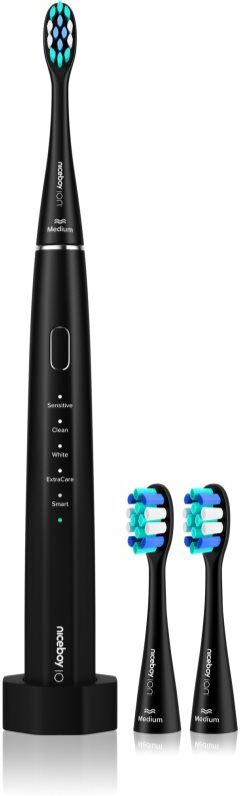
Niceboy ION Sonic Lite electric toothbrush + replacement headsNiceboy ION Sonic Lite, 1 pc, Replacement brush heads unisex, Discover a practical bundle of products designed to enhance your everyday moments. NiceboyION Sonic Lite set takes the hassle out of choosing by offering a combination of popular products. Now available together in one convenient pack. The set contains: Niceboy ION Sonic sonic electric toothbrush with bag 1 pc Niceboy ION Sonic Lite spare heads medium 2 pc Niceboy ION Sonic travel case for toothbrushes 1 pc Characteristics: prevents the formation of bacteria in the mouth provides effective prevention of gum disease prevents tartar and tooth decay does not irritate sensitive teeth and gums built-in timer How to use: Follow the instructions on the package.33,00 £*Shipping: 3,99 £Secure redirect to the provider
-
What is the difference between the carbonate ion and the bicarbonate ion?
The main difference between the carbonate ion (CO3^2-) and the bicarbonate ion (HCO3^-) is the number of hydrogen atoms present. The carbonate ion has a charge of -2 and does not contain any hydrogen atoms, while the bicarbonate ion has a charge of -1 and contains one hydrogen atom. Bicarbonate is a conjugate base of carbonic acid, while carbonate is a polyatomic ion on its own. **
-
What is the difference between a hydronium ion and an oxonium ion?
A hydronium ion (H3O+) is formed when a water molecule (H2O) gains a hydrogen ion (H+), resulting in a positively charged ion. On the other hand, an oxonium ion (also known as a protonated alcohol) is formed when an alcohol molecule gains a proton, resulting in a positively charged ion. While both ions have a positive charge, hydronium ions are specifically formed in aqueous solutions, whereas oxonium ions are formed in the context of organic chemistry reactions involving alcohols. **
-
How are lattice energy, ion charge, ion radius, and melting temperature related?
Lattice energy is the energy required to separate an ionic solid into its constituent ions. It is directly related to the ion charges and inversely related to the ion radius. Higher ion charges and smaller ion radii result in higher lattice energies. As lattice energy increases, so does the melting temperature of the ionic solid. This is because the stronger the ionic bonds (as indicated by higher lattice energy), the more energy is required to break those bonds, resulting in a higher melting temperature. **
-
What is the difference between the carbonate ion and the hydrogen carbonate ion?
The carbonate ion (CO3^2-) has a charge of -2 and consists of three oxygen atoms bonded to a central carbon atom. In contrast, the hydrogen carbonate ion (HCO3^-) has a charge of -1 and consists of one hydrogen atom, one carbon atom, and three oxygen atoms. The hydrogen carbonate ion is derived from the carbonate ion by the addition of a hydrogen ion, making it a conjugate acid of the carbonate ion. **
* All prices are inclusive of VAT and, if applicable, plus shipping costs. The offer information is based on the details provided by the respective shop and is updated through automated processes. Real-time updates do not occur, so deviations can occur in individual cases. ** Note: Parts of this content were created by AI.